I took a little break from Stephen King to read American Gods by Neil Gaiman. Battle between the old gods and the new gods with the main character, Shadow, stuck in the middle. My husband and I had opposite reactions to this book. We both agree it’s well written and researched. I liked the story. He did not. I guess we can’t agree all the time. Oh and it’s also a good comp for my god book that is currently just a thought, but I plan to work on after the Arn stories have wormed their way out of my head.
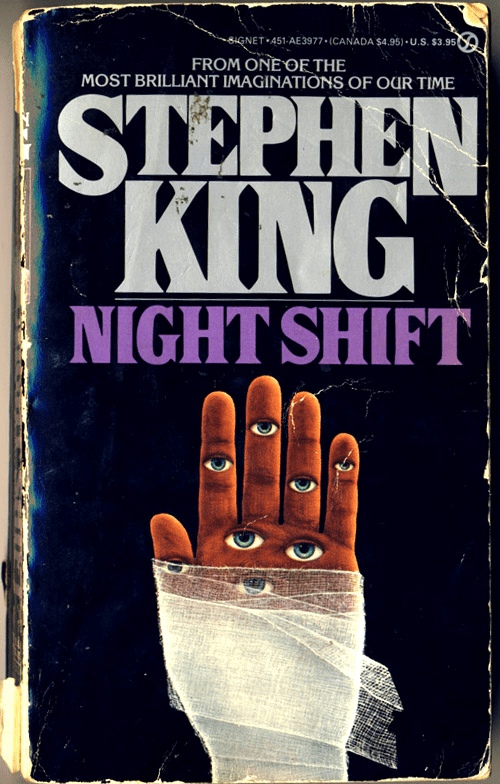
I started reading Night Shift a couple of days ago. It’s a collection of Stephen King’s early short stories. Most of the stories were published before Carrie in different magazines. I say this because I’m only three stories in and each one has a reference or a similar concept to a later book.
Jerusalem’s Lot, for example, is the first story and the tie in to ‘Salem’s Lot is obvious from the name alone. Indeed, the story is a prequel to ‘Salem’s Lot set in the 1800s. The story comes complete with nosferatu and in a very Stephen King fashion (someone said this is taken from H.P. Lovecraft, but since I haven’t delved into his work, I have no idea) there is a monster under a town (reminiscent of IT and Insomnia).
The next story, Graveyard Shift, also has a monster underground along with workplace angst. The workers manage to do what everyone wants to do if they have a bad boss and feed him to the monster.
Finally, in Night Surf, a group of teenagers are in the middle of the final days of the Captain Trips infection. The same infection killing everyone in the beginning of The Stand.
As I mentioned, most of the stories were written before Carrie was published. The hints at future stories make me wonder at the planning King was doing for his future works. Did the short stories come first and then he built from those? Was he already working on the novels and wrote the short stories as chapters or alongside the main stories? Or was there a master plan for his work and these were some of the off shoots? I have no idea, but I wouldn’t mind asking him if I got the chance. I imagine he’s been asked before.
Anyway, I felt compelled to write this because I was seeing all these connections to future King books. I’ll get back to it and see how the foreshadowing continues.
Here I sit, in a hotel, having just finished The Shining. I’m pretty sure my stay here will be relatively uneventful, but I’ll keep my eye on the exits.
I’ve been teased on more than one occasion these past few weeks about my never having read this book or having seen the movie until now. I still need to watch the movie. Of course, the mocking turns to a bit of awe when I tell them I’ve been inside The Stanley Hotel, which is the muse for The Shining novel. Another hotel in Oregon was used for the movie. One summer about 24 years ago, I was in a summer program in Boulder and we took a day trip to Estes Park and stopped for a pit stop at the hotel. We were only there for a few minutes, but it was long enough to solidify my mental image of the building while reading the book.
Funny enough, there was very little about the book that I didn’t already know. The story has been retold in pieces in so many places. The most vibrant retelling for me has been The Simpsons Treehouse of Horror episode. The book has shown up in many other shows and movies as well and I’ve seen many clips of the movie through the years as well. The plot was pretty well ruined by the time I read the book, but that didn’t take away from it in my opinion.
From the movie. Hmm…this famous scene isn’t in the book.
The Shining revolves around a small family, down on their luck because of the father’s (Jack) foul temper and history of drinking. He sober and unemployed when we meet him and interviewing for the job of winter caretaker of the Overlook Hotel. His marriage is on the rocks because of his drinking and subsequent abuse of his young son, Danny.
Danny has the ability to see into the future and can solve problems for his family from time to time. He struggles with the issues his parents face and has a bad premonition about living in the hotel, but he doesn’t share the information with his parents because they might think he’s crazy and he doesn’t want to mess up the opportunity his father has with this job.
The family moves to the hotel, and, on the first day, Danny meet Dick. Dick is also clairvoyant and recognizes the talent in Danny. He speaks with Danny about the gift. He calls it a shining. He warns Danny about the hotel. Some places have memories of the past. They may be scary, but they can’t harm you, he tells Danny. He tells Danny to call him with the shining if he needs help and he’ll come.
After all the staff has left, the family settles in and waits for winter. Jack works on a play he’s writing and works on the hotel. Most importantly, he relieves the boiler of steam two or three times a day so that it won’t explode. Jack and Danny begin to have odd experiences in the hotel.
After they are snowed in, Jack begins to lose his grip on reality. Danny has a terrifying experience and his mother wants to take him down the mountain on the snowmobile the hotel owns. Jack sabotages her efforts and the family must stay in the hotel. Danny realizes his father is no longer safe and calls for Dick. Dick, in Florida, drops everything and begins his journey to the hotel.
Another from the movie. This is in the book….sort of.
I’ll end my summary there. I really enjoyed the book. When I was younger, I did start to read it, but couldn’t get past the beginning. I don’t think I was relating to Jack very well. I was a teenager and he was older and interviewing for a job. I just didn’t connect. Now, it’s a lot easier to relate.
Oh and talk about relating. King almost convinced me (without trying) that I wanted to be a winter caretaker of a Colorado mountain hotel. The introvert in me thought it sounded awesome. The cook in me wanted the run of the fully stocked professional kitchen. A nice mountain view to sit next to and write with no access to the outside world sounds awesome, at least for a little while. This was in the 70s and I can’t imagine I’d be as enthusiastic without access to the internet. Maybe with a big pile of books…maybe.
All that in mind, I wouldn’t want to have the danger of a broken boiler hanging over my head all the time. Sleeping in once and BOOM! The whole place goes up. No thank you. I struggle with the idea that a big, swanky hotel would prefer to risk the loss over replacing the boiler. It just doesn’t make sense. Also, what happened those earlier years when bad things happened to the caretaker? Maybe it wasn’t as bad then and didn’t need to be depressurized as frequently.
I love King’s ability to introduce multiple characters and give in depth details about their lives without burying the reader in the details. I feel like I get to know the characters well. The Shining did an excellent job of this. Jack is an angry man and it stems from the confusion about his father’s love mixed with his abuse. He drank to ease his stress around his job and responsibilities to his family. His drinking led to him breaking his son’s arm when he was very small. He’s spent the years since trying to make up for it by quitting drinking, but still has a foul temper, which lost him his job. His wife, Wendy, has no good options and does her best to tolerate Jack and protect Danny. If she left Jack, she would have to move back with her mother because she doesn’t have a career or financial protections. Danny is a precocious child, which seems to be a side effect of his powers. He’s able to see into the minds of the adults around him and so can put together the problems of the adult world in a way no other child under six can. He’s so brave throughout the book, both when handling his parent’s problems and when facing the evil in the hotel. Finally, Dick is an awesome character. I love his wit and his devotion to Danny based on a short meeting. He’s figured out what he wants out of life and isn’t afraid to rock his boat to help others. Great character.
On to the next one. Night Shift. I think I read this one back in the day, but I don’t remember a thing about it. Also, I found a woman on Facebook who was selling her Stephen King books and added a ton of his books to my library. I probably still have less than half of his books, but I grabbed a good chunk of them.
So, I love vampire stories. Dracula, Anne Rice, Lost Boys, Fright Night, Blade, the Buffy-verse, even Twilight (though it gets a little rough when I start thinking about the relationship dynamics going on there). So many others. Serious and silly, I enjoy them.
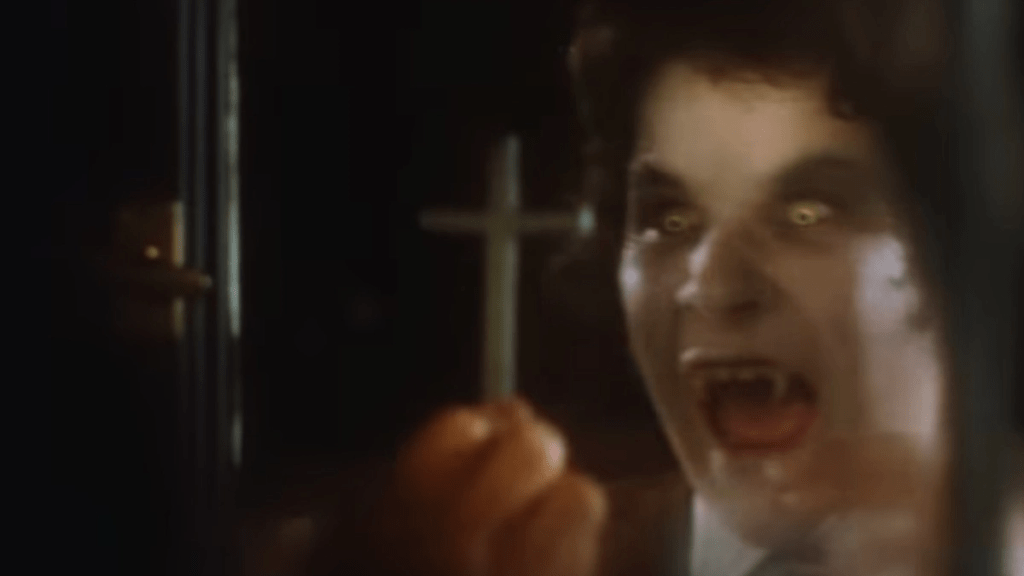
Salem’s Lot is quintessential vampire. They can’t go out during the day. Holy water and crosses hurt them if the wielder believes in them. They can’t enter a home without permission and hypnotize their victims to get inside. They can mist through things and their reflections are not solid if present at all. A stake to the heart is the preferred method to kill them.
When people break these vampire “rules”, the story is harder to enjoy. I just think the author is trying to fix holes in their plot. Twilight is the worst of the rule breakers. Blade also breaks the rule but has a much better plot line explaining why Blade can go out in the daylight.
Salem’s Lot is a small town in Maine. Writer Ben Mears has returned to the Lot to work on a book about the town’s most notorious murder/suicide and the home it happened in, Marsten House. He planned to rent the house and write his book there, but he learned the home had been purchased. The new owners seemed to be moving in around the time Ben arrived in town.
A small boy disappears one night in the woods and his older brother is stricken with illness and can’t remember what happened to them. Eventually the older brother dies. Others come down with a similar illness and die as well.
Ben and his group of friends suspect the new owners of Marsten House are vampires and come up with a plan to confront them. One-by-one, Ben’s friends are picked off until it is just him and a boy from town. They manage to kill the head vampire and then flee town.
My biggest complaint about this book is how fast Ben and his friends decide a vampire is running around, almost like it was an everyday problem. Sure, they get concrete confirmation soon enough, but the initial jump to that conclusion was too soon.
Otherwise, I think this is a great book. The character development is spot on, which I expect from Stephen King. He can give a random, short-lived character life in a way that few other authors manage.
Next up, I’m reading Rage by Richard Bachman (aka Stephen King). King made the pseudonym because back in the 1970s, a writer couldn’t publish more than one book per year (source: https://en.wikipedia.org/wiki/Richard_Bachman). King is known for being prolific to the extent that I’ve heard some people say he has a team of writers working for him to churn out his books. Seems unlikely to me, but you never know for sure. Either way, I don’t really care. I still enjoy his books.
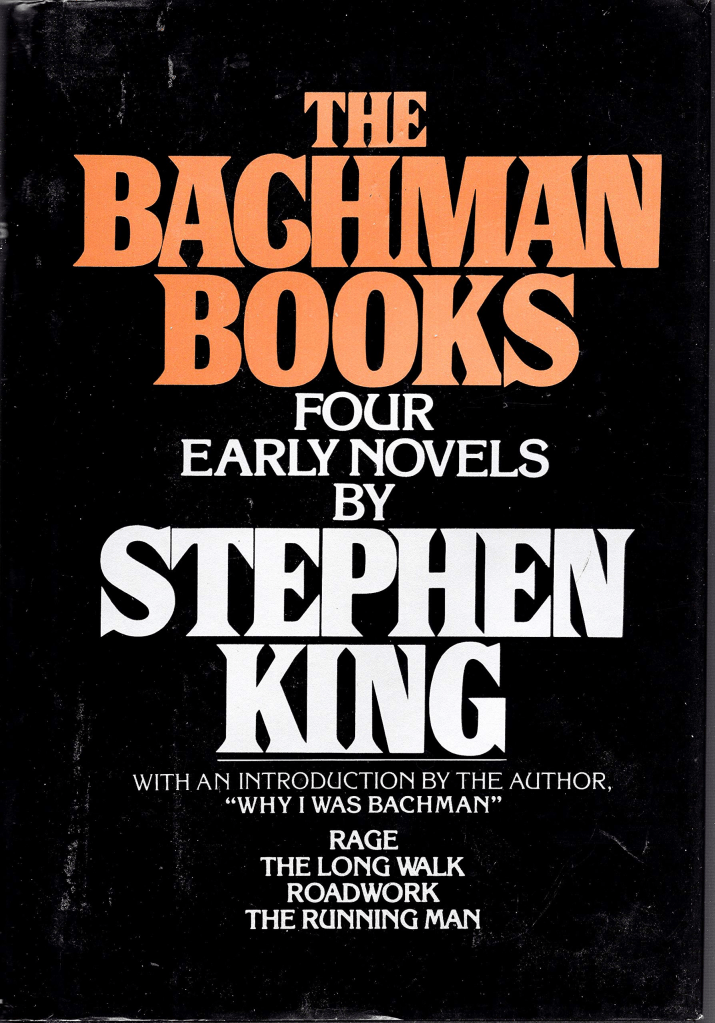
I found there was a hurdle to reading everything King, out-of-print. Rage is the first book I’ve come to in King’s list that is OOP. There was a collection of the Bachman books (image above), but that is also OOP. I found an old used copy for sale online finally so I’ll be able to keep reading everything in order.
Well, I have to give up on watching the movies and shows if I’m ever going to make progress on my little experiment. I made it through the first Carrie movie but haven’t found the time to watch the other three. It’s still a little surprising that there are 4 total Carrie movies.
For the rest of this, there will be spoilers. I figure most people who get even this far will have an idea of what happens in Carrie so probably no issues.
Carrie is a great short(ish) horror story. Stephen King’s first published novel, he famously threw the unfinished manuscript in the trash in frustration that the story wasn’t forming well. His wife, Tabitha, fished it out of the bin (trash can, wastepaper basket, take your pick. I’ve been seeing a lot of Tiktoks about the differences between American English and British English recently) and read the pages. She pressed him to continue the book and helped with the menstruation parts so he could get them right. Carrie was then rejected 30 times before being accepted by a publisher and published in 1974. The novel is a mix of narratives by an omniscient narrator and various scientists and writers in Carrie’s world writing articles to attempt an explanation of Carrie and the events on prom night.
My take on Carrie:
High school sucks. People are mean. Even nice people will be mean when the group is in mean mode. Carrie was the perfect victim of high school meanness and had a very public moment of weakness to feed the mean.
I relate in a small way to Sue Snell, the nice girl who is mean to Carrie. I remember joining in on teasing once in a while in middle and high school. I never tried to be mean, but I was mean. I would and still do feel bad for that. The victims of the meanness were, like Carrie, the oddballs. They didn’t behave like the rest of us. Of course, I’m one to talk there. I didn’t behave like the rest of them either, but I was close enough to whatever normal was to avoid most attacks.
Sue was different though. She was popular and could make a heroic effort to atone for her meanness. And, by all appearances, she would have been successful if not for the truly mean, mean girl, Chris. Sue’s sincere gesture to have her popular boyfriend, Tommy, take Carrie to the prom and give Carrie a chance to fit in was embraced by her peers enough that Carrie began to feel accepted before her and their doom literally fell on her head.
When the blood fell, I preferred King’s description to the movie. In the movie, the kids all just laughed at Carrie, making them seem to still fall into the mean category. In the book, the first laugh was a shocked response to Carrie’s shocked expression. Everyone else was shocked. The first laugh wasn’t born of any malice, but surprise. Unfortunately, that first laugh started a chain reaction that was part shock and part lack of knowing what was going on and part following the crowd. People are mean.
The best and most awful part of this story is how it still resonates today. Even with all the anti-bullying rhetoric over the years, kids still pick on each other relentlessly. There is little tolerance for behavior that stands out as odd and the mean kids will find pleasure picking on those who don’t fit the mold well enough. Parents of the mean kids aren’t helpful. They either don’t believe their angels would act that way or they support it. Have to be tough to survive mentality.
As for Carrie’s supernatural abilities, the book helped build that into her background in a way that was missing in the movie. Knowing that she’s always had this ability but hadn’t learned to use it was more satisfying than simply developing the power when she was made fun of once.
Also in the book, Carrie’s mother mentions that a demon came to them once and was sent away. The description reminded me of Randall Flagg (a King character that represents evil first in The Stand and then in later works as well) and now Google tells me I’m not the only one to notice that similarity. Some even suggest that Flagg is Carrie’s father. Certainly, a possibility in the world of Stephen King that would account for Carrie’s ability, but the book seemed to put a divide between Ralph White and the demon. Great tie in if the character is the same regardless of Carrie’s parentage.
All-in-all, I like the book. It’s a little rougher than King’s later work, but that’s expected for a new novelist. Even one who was destined to be one of the most successful of all time. It’s also a quick read for those who want a short read with lots of breaks to pause at.
Next book is Salem’s Lot. Vampires yay!
Summary of Carrie:
A girl with some innate, buried psychokinetic abilities grows up in a repressed, ultra-religious house with a widowed mother. Her abilities have shown up once or twice during her childhood with the biggest event happening during abuse by her mother after she observed a neighbor sunbathing in a bikini. Carrie made stone rain down on her house. Her mother didn’t seem to connect the event with Carrie, or at least she blew off the inclination to think the girl was responsible.
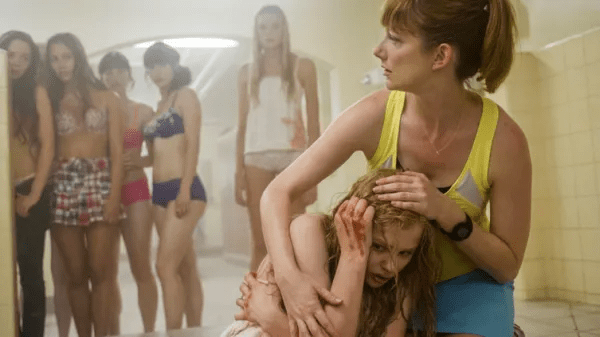
Fast forward, and Carrie is sixteen. She starts her period in the gym locker room shower. All the girls tease her and throw feminine products at her until the gym teacher intervenes. She shoos away the girls and gets Carrie cleaned up. She and the principal decide to send Carrie home.
Back home, her mother berates her for sinning and bringing on the period. Here’s the first part where I’m cheering Carrie on. Up to now, she’s been a passive victim and now she asks her mother why she never taught Carrie about menstruation. Her mother becomes indignant and forces Carrie into a closet she uses for punishment. Carrie begins to realize she can control things with her mind.
In the meantime, the gym teacher punishes the bad behavior of the girls by giving them a week’s detention with the threat of losing their prom tickets if they do not show up. One girl, Chris, doesn’t show up and isn’t allowed to go to prom. She’s the daughter of a prominent lawyer in town and her father threatens the principal with a lawsuit. The principal holds his ground. Chris and her bad boy boyfriend come up with a plan to get back at Carrie at the prom.
Another girl, Sue, from the gym class feels bad about the way Carrie was treated and wants to try to help Carrie come out of her shell and make friends. Sue asks her popular boyfriend to ask Carrie to the prom. Carrie refuses the invitation at first but is pressured into saying yes. Her mother hates the idea, convinced Carrie will sin and fornicate, but Carrie scares her with her powers. Carrie sews her own dress for the dance and is excited to be accepted by her peers.
At the prom, Carrie and her date are on the ballot for prom king and queen and win. After they’ve been crowned on the stage with everyone watching, Chris dumps a bucket of pig’s blood over Carrie’s head. The kids start to laugh, and Carrie begins to use her psychokinetic abilities to trap the kids and chaperones in the gym. A fire starts and most of the prom attendees die. Carrie continues walking through the town causing destruction and mayhem as she makes her way home. At home, she kills her mother, but is injured in the process. Then she hunts down Chris and kills her and her boyfriend before dying herself.
References:
King, S. (2020). On writing: A memoir of the craft. Hodder.









 S. E. Baran